
Quick Answer: Macros are protein, carbohydrates and fat, the three nutrients that supply calories. To count them: (1) set a daily calorie target, (2) set protein at about 0.7 to 1 gram per pound of goal body weight, (3) set fat at 25 to 35 percent of calories, (4) fill the rest with carbs, then (5) log your food in an app and adjust every 2 to 3 weeks. Protein and carbs have 4 calories per gram; fat has 9. For weight loss, start about 300 to 500 calories below maintenance and keep protein high.
Table of Contents
Counting macros gives your eating more structure than counting calories alone. Instead of tracking a single number, you set targets for protein, carbs and fat, which helps you stay full, keep muscle and fuel your workouts. This guide covers what each macro does, how to set your own targets step by step, and how to make tracking easier to stick with.
What are macros?
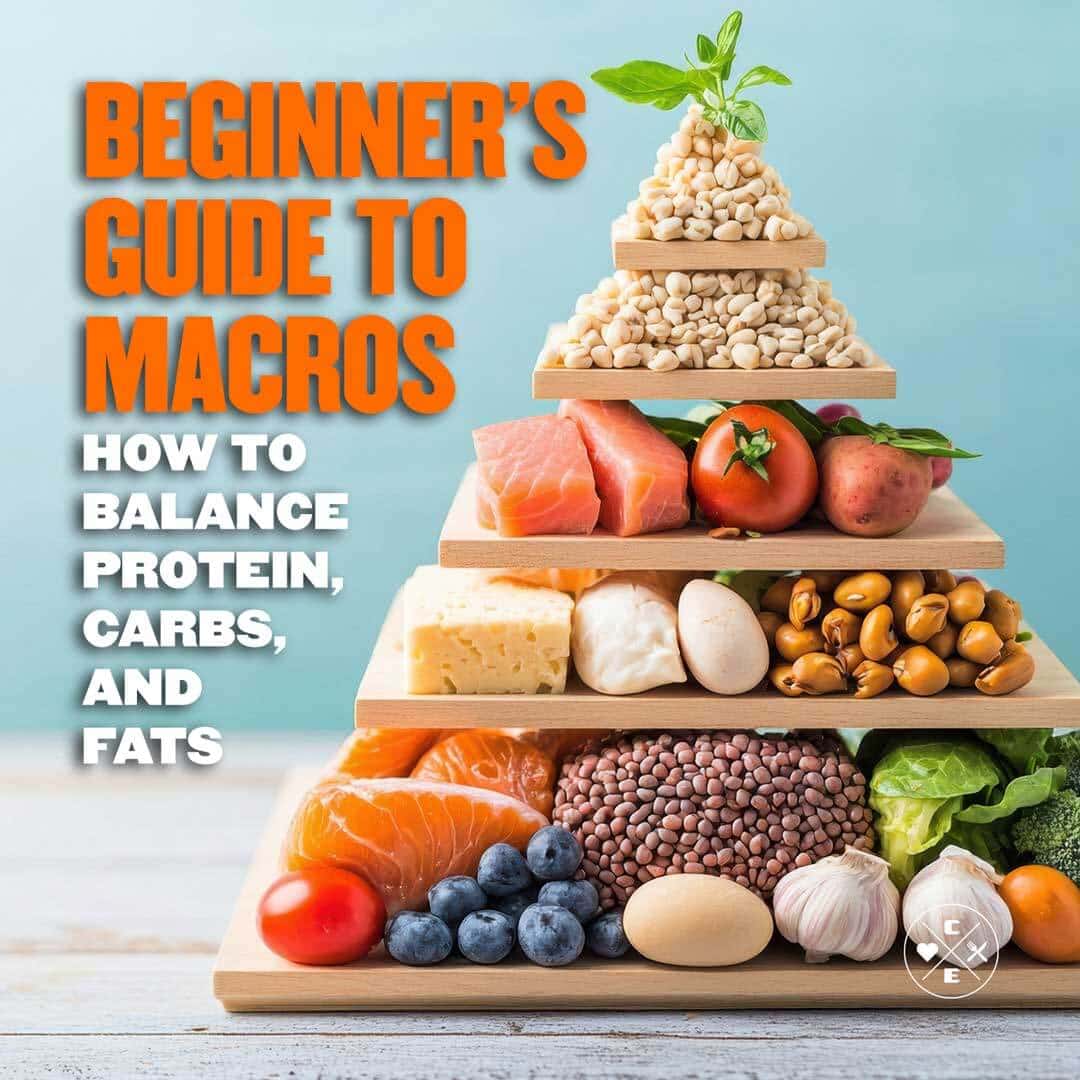
Macronutrients, or "macros," are the nutrients your body needs in large amounts and the only ones that provide calories:
- Protein: 4 calories per gram
- Carbohydrates: 4 calories per gram
- Fat: 9 calories per gram
The National Academies' acceptable ranges for adults are 10 to 35 percent of calories from protein, 45 to 65 percent from carbohydrates and 20 to 35 percent from fat.1 Those are broad ranges for general health; your own targets depend on your goals and activity.
Protein
Protein supplies the amino acids your body uses to build and repair muscle and other tissues, and it's the most filling of the three macros. That makes it the one to prioritize, especially when you're eating fewer calories.
| Protein source | Examples |
|---|---|
| Poultry | chicken breast, turkey breast |
| Fish and seafood | salmon, tuna, cod, shrimp, sardines |
| Eggs and dairy | eggs, Greek yogurt, cottage cheese, milk |
| Red meat | lean beef, bison, pork tenderloin |
| Legumes | lentils, black beans, chickpeas |
| Soy | tofu, tempeh, edamame |
| Nuts and seeds | almonds, pumpkin seeds, hemp seeds (higher in fat than protein) |
Carbohydrates
Carbs are your body's main source of quick energy and the main fuel for hard exercise. Quality matters more than the number: whole grains, beans, fruit and vegetables bring fiber that keeps you full and steadies blood sugar, while sugary drinks, candy and refined snacks digest fast and are easy to overeat. Whole fruit contains natural sugar but also fiber, so it belongs with the first group. For more, see Are Carbs Bad for You?
Fats
Fat helps you absorb vitamins A, D, E and K and is needed to make hormones. Unsaturated fats from olive oil, avocado, nuts, seeds and fatty fish are the ones to favor. Keep saturated fat from fatty meats, butter and full-fat cheese moderate, and avoid trans fats. Because fat has more than twice the calories per gram of protein or carbs, small amounts of oil, nut butter and cheese add up fast.
How to count macros, step by step
Step 1: Set your calorie target
Start by estimating how many calories you burn in a day, then adjust for your goal. Our calorie calculator estimates it from your age, sex, height, weight and activity level.
- To lose weight: eat about 300 to 500 calories below that number, which works out to roughly 0.5 to 1 pound a week for most people.
- To maintain: eat about that number.
- To build muscle: eat slightly above it, around 200 to 300 calories more.
Step 2: Set protein in grams
Set protein first, because it's the macro that most affects fullness and muscle. For active adults, research supports about 1.6 to 2.2 grams per kilogram of body weight a day, roughly 0.7 to 1 gram per pound.2,3 If you have a lot of weight to lose, base this on your goal weight rather than your current weight, or the number gets unrealistically high. Our protein intake calculator will give you a personal target.
Step 3: Set fat
Set fat at about 25 to 35 percent of your calories. Going much below 20 percent makes meals less satisfying and makes it harder to get enough essential fats.
Step 4: Fill the rest with carbs
Whatever calories are left go to carbohydrates. If you train hard, you'll want more of them; if you feel better eating fewer carbs, shift a little more to fat.
Worked example: a 180-pound person aiming for 160 pounds, eating 1,800 calories a day to lose weight.
- Protein: 0.8 g × 160 lb goal weight = about 130 g × 4 = 520 calories
- Fat: 30% of 1,800 = 540 calories ÷ 9 = 60 g
- Carbs: 1,800 − 520 − 540 = 740 calories ÷ 4 = about 185 g
Daily targets: about 130 g protein, 185 g carbs and 60 g fat.
Prefer percentages? You can pick a ratio instead and convert it. Multiply your calories by each percentage, then divide protein and carbs by 4 and fat by 9. Common starting points:
| Approach | Protein / Carbs / Fat | At 1,600 calories |
|---|---|---|
| Balanced | 30% / 40% / 30% | 120 g / 160 g / 53 g |
| Higher protein (weight loss) | 40% / 35% / 25% | 160 g / 140 g / 44 g |
| Lower carb | 35% / 25% / 40% | 140 g / 100 g / 71 g |
| Active / athletic | 30% / 45% / 25% | 120 g / 180 g / 44 g |
Check the protein number a ratio gives you against Step 2. Percentages can land too low at low calories or too high at high calories, which is why the grams-first method above is usually more accurate. For more on choosing a ratio, see our guide to macronutrient ratios for weight loss.
Step 5: Track what you eat
- Use an app. MyFitnessPal, Lose It! and Cronometer let you scan barcodes, set custom macro targets and see running totals. Choose verified database entries, because user-added ones are often wrong.
- Weigh calorie-dense foods. A food scale is the biggest accuracy upgrade. That "tablespoon" of peanut butter is often two or three.
- Batch your meals. When you prep meals with known amounts, you log once and repeat. Our Complete Meal Prep Guide covers how.
You don't need to hit every number exactly. Landing within about 5 to 10 grams of each target most days is plenty.
Step 6: Adjust every 2 to 3 weeks
Your starting numbers are an estimate. If your weight, measurements or energy haven't moved the way you want after 2 to 3 weeks of consistent tracking, adjust calories by about 100 to 200 a day and reassess.
Counting macros for weight loss
Weight loss comes from the calorie deficit, not from a particular macro split. What macros add is control over what you lose and how it feels:
- Keep protein high. More protein helps you stay full on fewer calories and helps preserve muscle, so more of the weight you lose comes from fat.4
- Choose filling carbs. With fewer calories to spend, put them toward vegetables, fruit, beans and whole grains rather than sugary drinks and snacks.
- Measure fats. Oils, dressings, nuts and cheese are the easiest place for untracked calories to hide.
- Pick a split you can live with. In long-term trials, lower-carb and lower-fat diets lead to similar weight loss when calories are matched. The one you stick with wins.
Exercise helps too, especially strength training, which tells your body to hold on to muscle. See our guide to the best exercises for weight loss.
Tips for hitting your macros
Build every meal around protein. Aim for about 25 to 40 grams at each meal rather than a little at breakfast and most of it at dinner. Spreading it out makes the daily target easier to hit and may better support muscle.2
Fill half your plate with vegetables. They add volume and fiber for very few calories.
Use your hand as a backup. When you can't weigh food, a palm-sized portion of protein, a cupped hand of carbs and a thumb of fat is a reasonable estimate.
Plan ahead for eating out. Check the menu for nutrition information, choose grilled over fried, and ask for sauces and dressings on the side.
Think in weeks, not days. If you go over one day, ease back slightly the next. Your weekly average matters more than any single day.
Common macro-counting mistakes
- Not weighing calorie-dense foods: oils, nut butters, cheese and nuts quietly add hundreds of calories.
- Chasing protein at night: include protein at breakfast and lunch so you're not trying to eat 80 grams at dinner.
- Trusting random app entries: use verified entries or create your own from the label.
- Tracking weekdays only: weekends count just as much.
- Never adjusting: if nothing has changed in 2 to 3 weeks, small adjustments are part of the process, not a failure.
Tracking gets easier quickly. After a few weeks, you'll have logged your regular meals many times and can estimate portions much more accurately. Many people move to logging only new foods, or tracking a few days a week to stay on course.
Tracking isn't for everyone. If logging food starts to feel stressful, obsessive or triggering, step back to a simpler approach like protein-focused meals, portion guides or pre-portioned meals, and talk with a registered dietitian or your doctor. If you're pregnant, have a history of disordered eating or have a medical condition, check with a professional before you start.
The easier way: meals with the math done
Weighing, logging and doing the math every day is the part most people give up on. Pre-portioned meals with listed nutrition take most of that work away: you log one entry and know exactly what you're getting.
The nutrition for every Clean Eatz Kitchen meal, including calories, protein, carbs and fat, is on our nutrition page, so you can choose meals that fit your targets before you order.
- Weight Loss Meal Plan: meals under 500 calories (most around 400), with at least 20 grams of protein and under 50 grams of carbs each.
- High Protein Meal Plan: XL portions with typically 35 grams of protein or more per meal.
- Build a Meal Plan: pick the individual meals that match your macros.
It's still worth learning to count macros yourself, because it helps when you're eating out or cooking at home. For everyday meals, having the math done makes consistency much easier.
Frequently asked questions
What are macros?
Macros, short for macronutrients, are the three nutrients that supply calories: protein, carbohydrates and fat. Protein and carbohydrates have 4 calories per gram, and fat has 9.
How do I count macros for beginners?
Set a daily calorie target, then set protein in grams (about 0.7 to 1 gram per pound of goal body weight), set fat at 25 to 35 percent of calories, and fill the remaining calories with carbs. Log what you eat in a tracking app, weigh calorie-dense foods, and adjust every 2 to 3 weeks based on your progress.
How do I count macros for weight loss?
Start with a calorie target about 300 to 500 calories below maintenance, keep protein high to protect muscle, and split the rest between carbs and fat in whatever way you can stick with. Weight loss comes from the calorie deficit; the macro split mostly affects how full you feel and how much muscle you keep.
What is a good macro ratio for beginners?
A balanced starting point is about 30 percent protein, 40 percent carbs and 30 percent fat. For weight loss, many people do well with more protein, such as 40 percent protein, 35 percent carbs and 25 percent fat. The best ratio is one you can stick with.
How much protein do I need per day?
Most active adults do well with about 1.6 to 2.2 grams per kilogram of body weight, or roughly 0.7 to 1 gram per pound. If you have a lot of weight to lose, base it on your goal weight instead of your current weight.
What if I don't hit my macros exactly?
That's normal. Aim to land within about 5 to 10 grams of each target most days and focus on your weekly average. Consistency over weeks matters far more than any single day.
Should I count macros or calories?
Both work for weight loss, because the calorie deficit drives it. Counting macros adds a protein target, which helps you stay full and keep muscle. If detailed tracking feels like too much, counting calories and protein alone is a good middle ground.
References
- Institute of Medicine. Dietary Reference Intakes for Energy, Carbohydrate, Fiber, Fat, Fatty Acids, Cholesterol, Protein, and Amino Acids. Washington, DC: National Academies Press; 2005.
- Jäger R, Kerksick CM, Campbell BI, et al. International Society of Sports Nutrition position stand: protein and exercise. J Int Soc Sports Nutr. 2017;14:20.
- Morton RW, Murphy KT, McKellar SR, et al. A systematic review, meta-analysis and meta-regression of the effect of protein supplementation on resistance training-induced gains in muscle mass and strength in healthy adults. Br J Sports Med. 2018;52(6):376–384.
- Leidy HJ, Clifton PM, Astrup A, et al. The role of protein in weight loss and maintenance. Am J Clin Nutr. 2015;101(6):1320S–1329S.
Disclaimer: This article is for general information only and isn't medical advice.